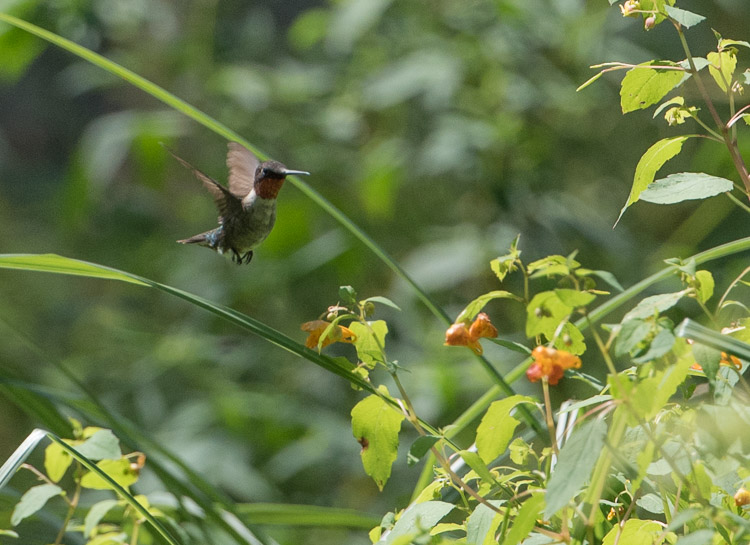
Another look at my bog walk escort last weekend.
Another look at my bog walk escort last weekend.

On our visit to the far bog at mid-day, we were surprised by a pair of humming birds joining us on our walk.
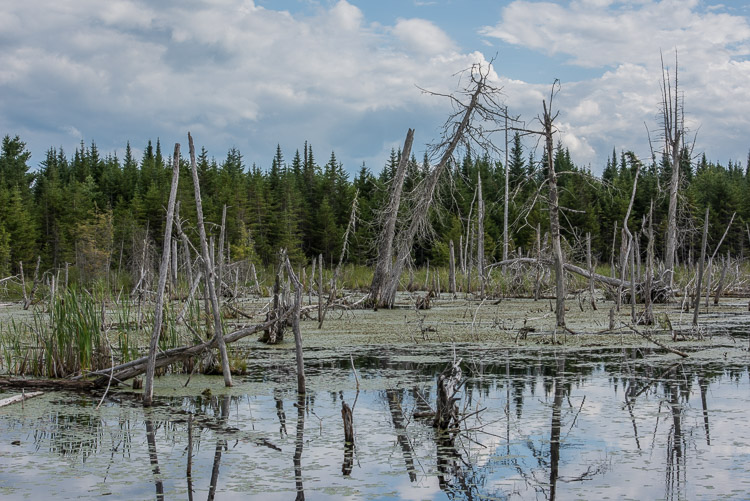
We have friends with a camp in the Maine wilderness north of Bangor. The camp is “beyond the grid” in the “tableland” before “Ktaadn,” near the path of Thoreau as reported in his essays about The Maine Woods. When we pass bogs like this, I like to think I am back in 1846 and looking at sights he would have seen. I consider it progress if it looked like this back then.
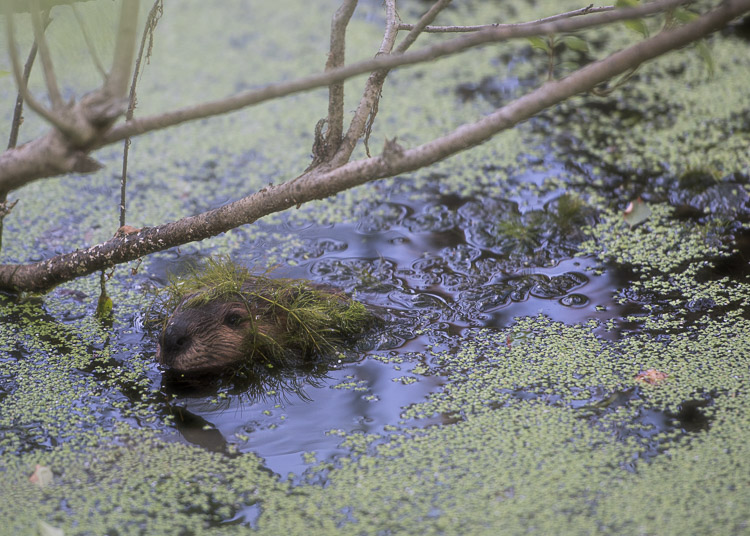
After spending twenty minutes watching the pair of beavers (see my earlier posts), one of them went underwater and surfaced right next to me. We stared at each other until I gave up!
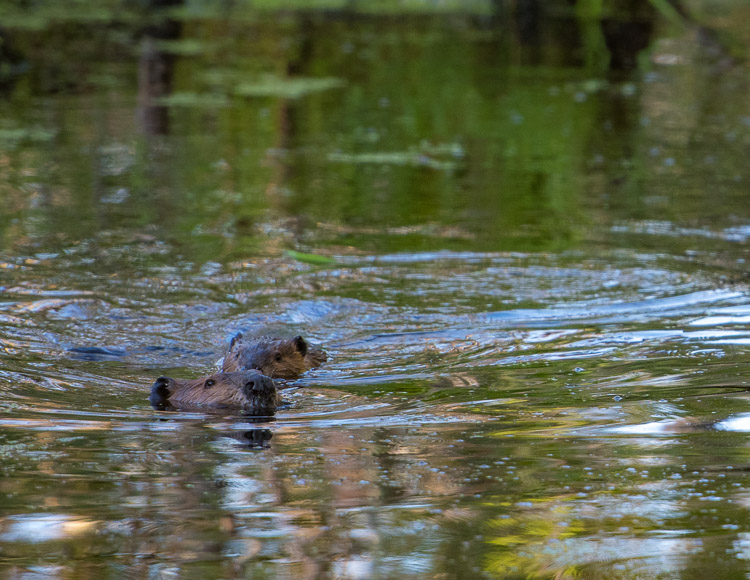
The pair of beavers that came to see what I was up to last week.

Last week during a late afternoon visit to the far bog, we found two of the beavers patrolling around their den. Here is the first one investigating my presence.
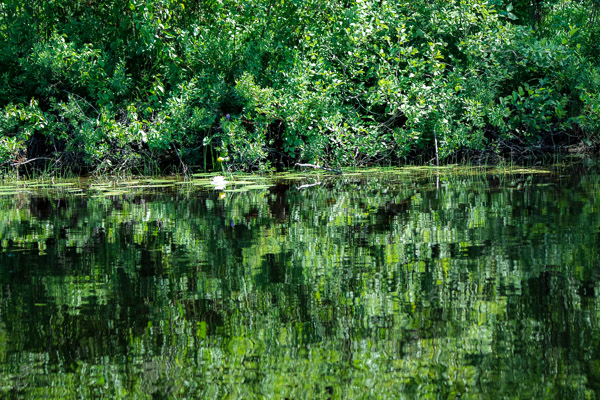
This is Maine wilderness. There are no homes, developments, or commerce anywhere near here. It was not always like this. Historians and locals tell us there were fields of hay and farmland along both sides of the stream over a hundred years ago. The stream was used to deliver logs from the woodlands to the north to the mills to the south. Over two hundred years ago, it probably looked like this. Nature can come full circle if somebody doesn’t screw it up with uncontrolled manufactured pesticides, fertilizers, or industrial chemicals.
Drifting along the Madagascal stream in the center of Maine, I hear Stephen Stills in my head, “Mother Nature made it green, the prettiest place you’ve ever seen ….”
If you don’t have clean water and clean air, you got nothing; and the jobs, commerce, and wealth you traded for screwing up the air and the water can only be short-lived and eventually of no value.
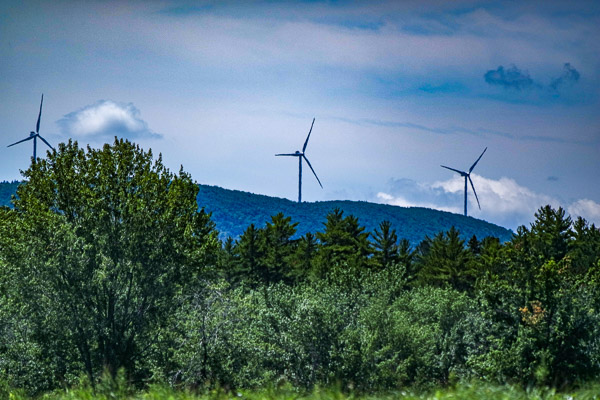
Passadumkeag ridge as seen from Madagascal stream.

Looking out onto Passadumkeag ridge south of Burlington ME.
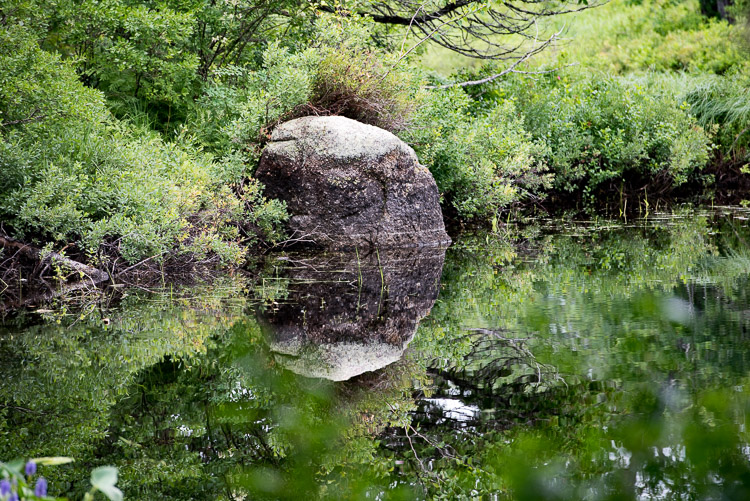
A favorite place miles from a power line and the only man-made noise is from 30,000 feet high.
 john's f-stop