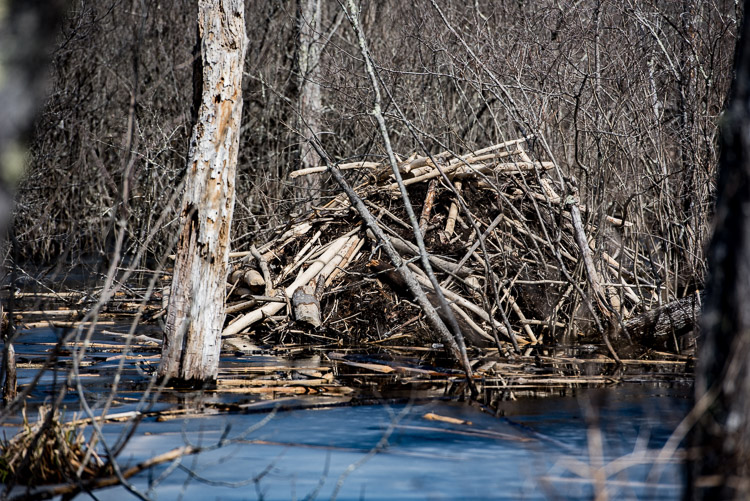
A look at the beaver’s house after a not-so-bad winter. There is freshly stripped wood scattered around and on top of the den.
A look at the beaver’s house after a not-so-bad winter. There is freshly stripped wood scattered around and on top of the den.

At the far bog, more work product of the beavers is on display.
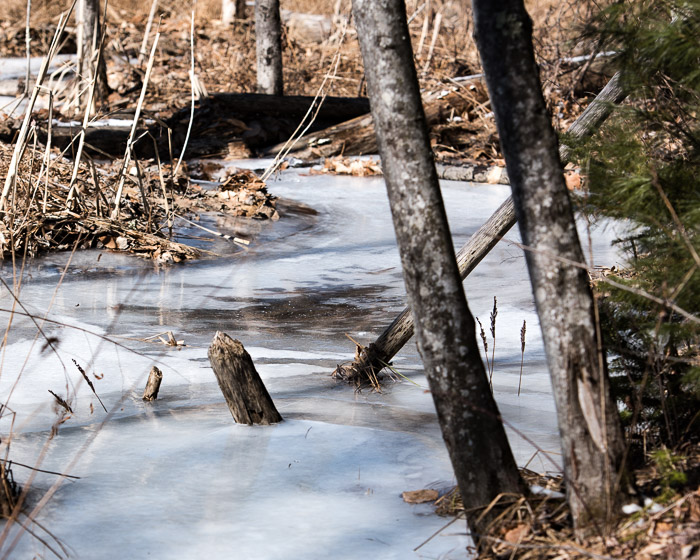
While we lack snow cover, the recent freeze solidifies the creek in the upper bog. A remnant of the previous beaver colony is a chewed off stump.
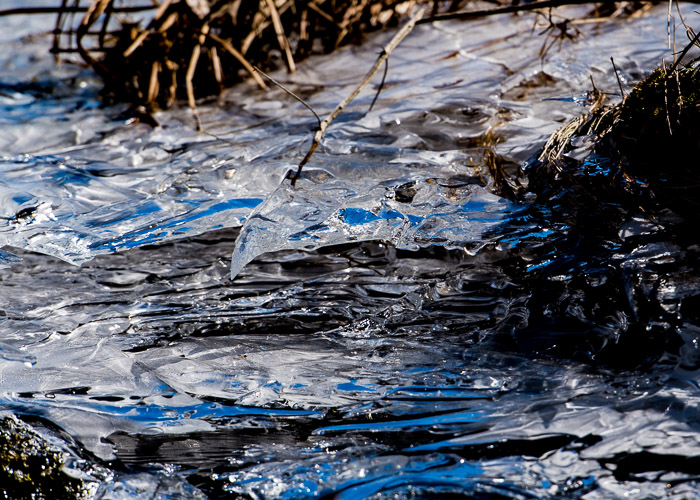
During the recent freeze, we caught the bright blue sky reflected intricately among the bog creek’s ice.
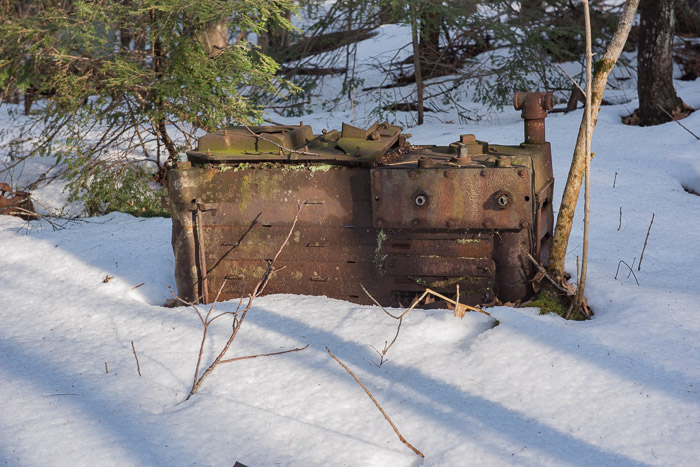
A furnace or engine block of some sort. Gathering moss and rusting out in a forest setting, perhaps a quarter mile or more from the nearest dwelling (of the present generation).
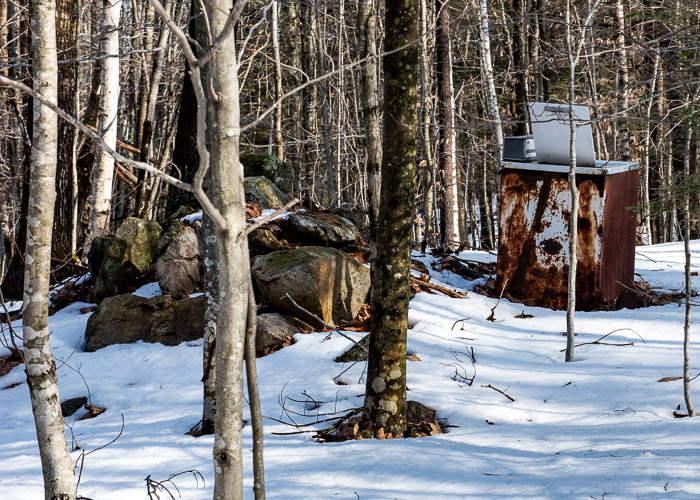
Our paths through the backwoods usually lead us past nature at her best. Sometimes we find the evidence of man in stone walls, piles of rock, and trails enhanced with bridges and grading. At other times, the evidence is erosion from vehicles, excessively trimmed branches and trees, or discarded cans and bottles. Most of the larger pieces of human detritus we find are related to transportation: old cars and tractors. This was our first electric powered washing machine.
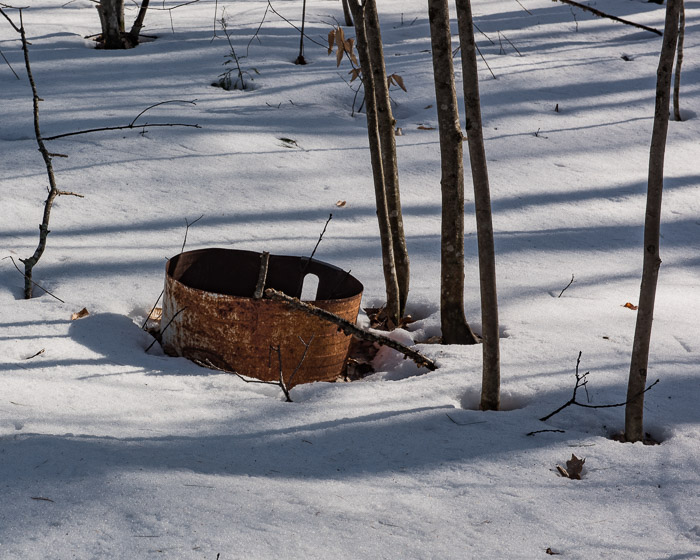
In a corner of a farmer’s field, now a forest marked by crumbling stone walls, we find remnants of a later generation which used the woods for a different purpose.
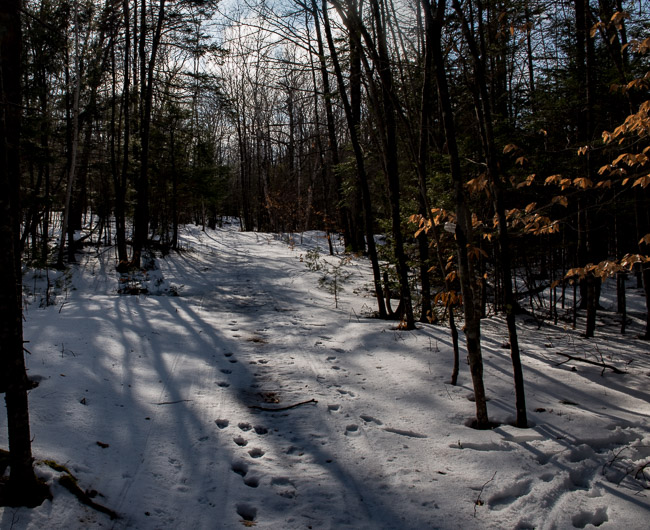
We found a set of multiple tracks on the trail last week. It appeared that multiple dogs and at least one person trekked through the back woods. We later learned a pair of dogs got loose down the road and people were looking for them.
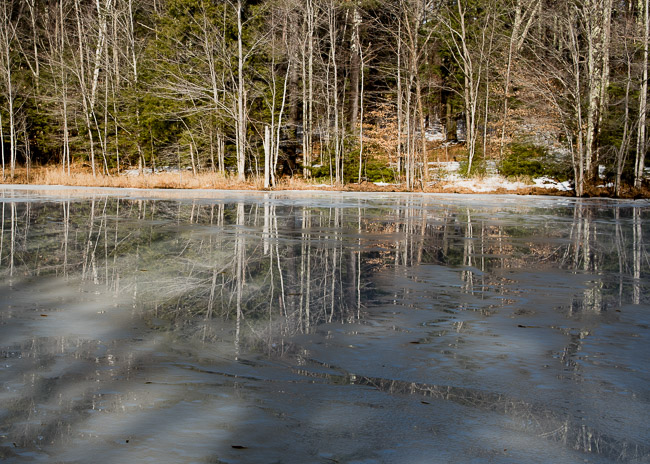
The no-name pond struggles to decide whether to be frozen or liquid; snow cover is diminishing by the day as February proceeds to spring.
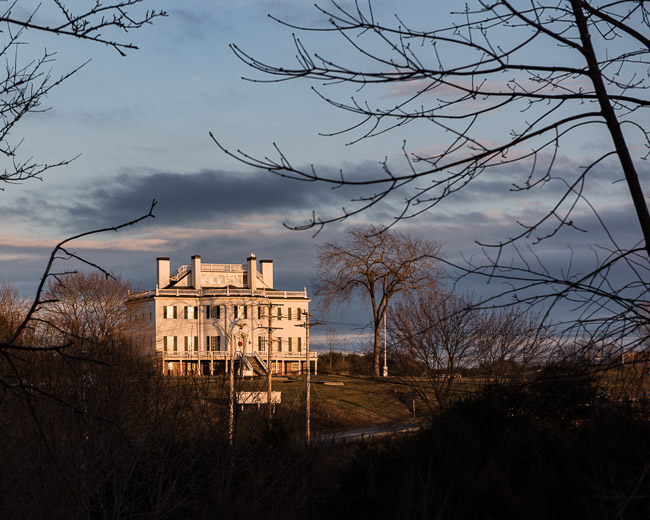
A recent winter sunset lights up Gen. Henry Knox’s mansion in Thomaston ME
 john's f-stop