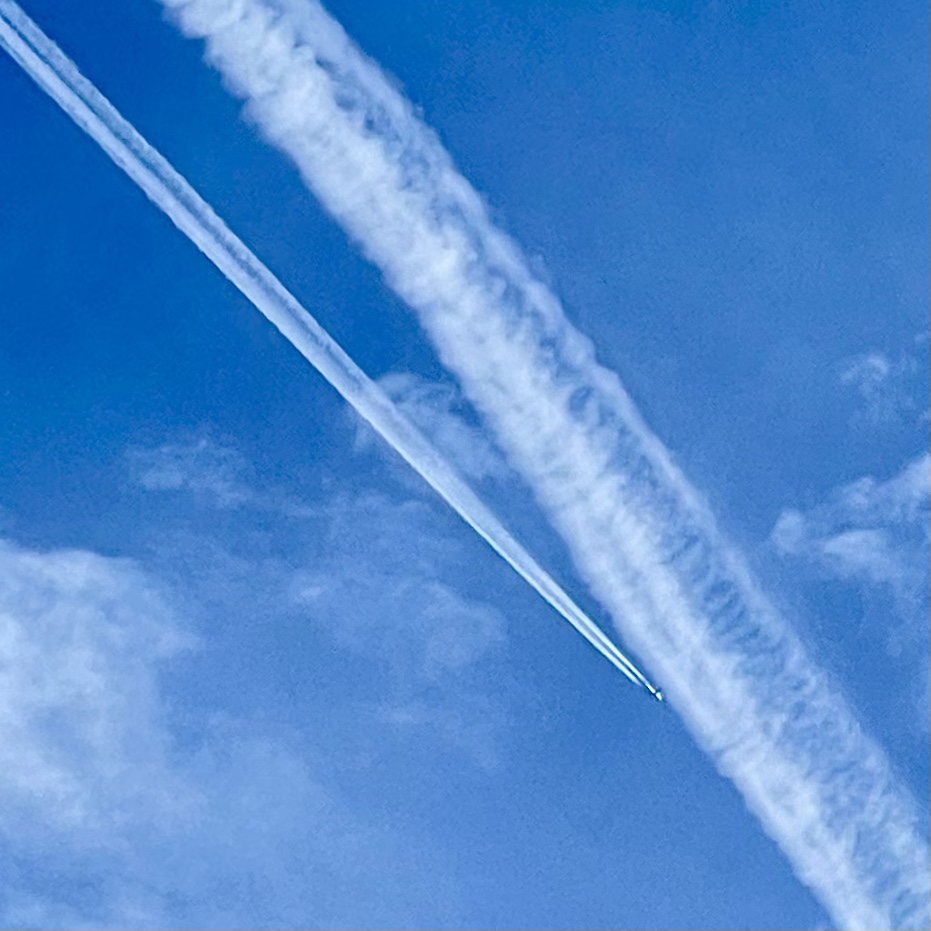
When there are no birds to see, I search for other interesting sites. Every few days the air traffic inbound from Europe goes over our heads.
Five miles up
When there are no birds to see, I search for other interesting sites. Every few days the air traffic inbound from Europe goes over our heads.
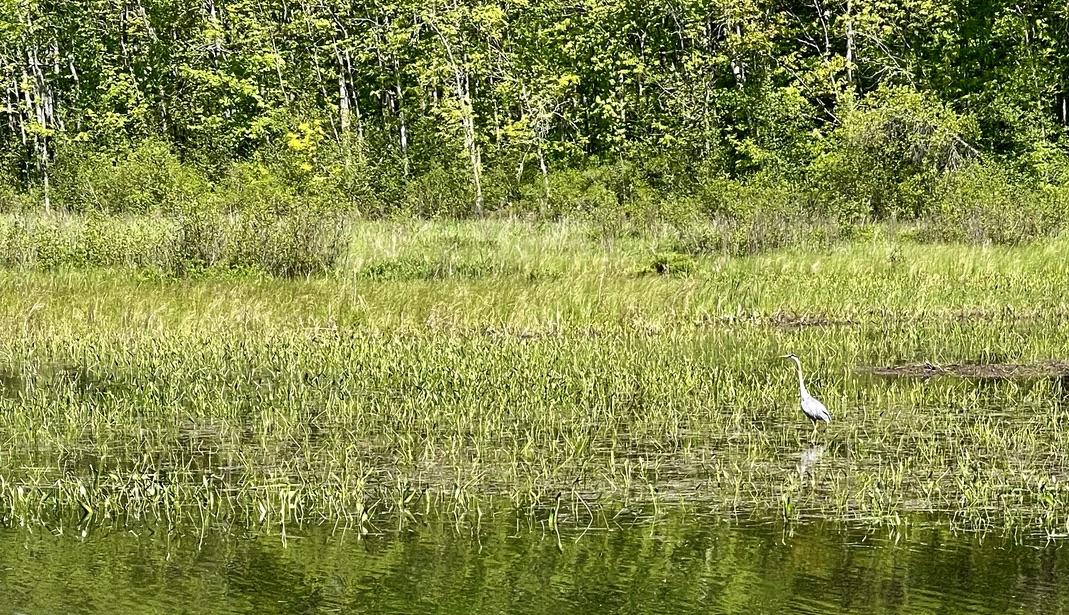
A blue heron investigates the boggy area near a stream feeding the Cobbosseecontee Pond.
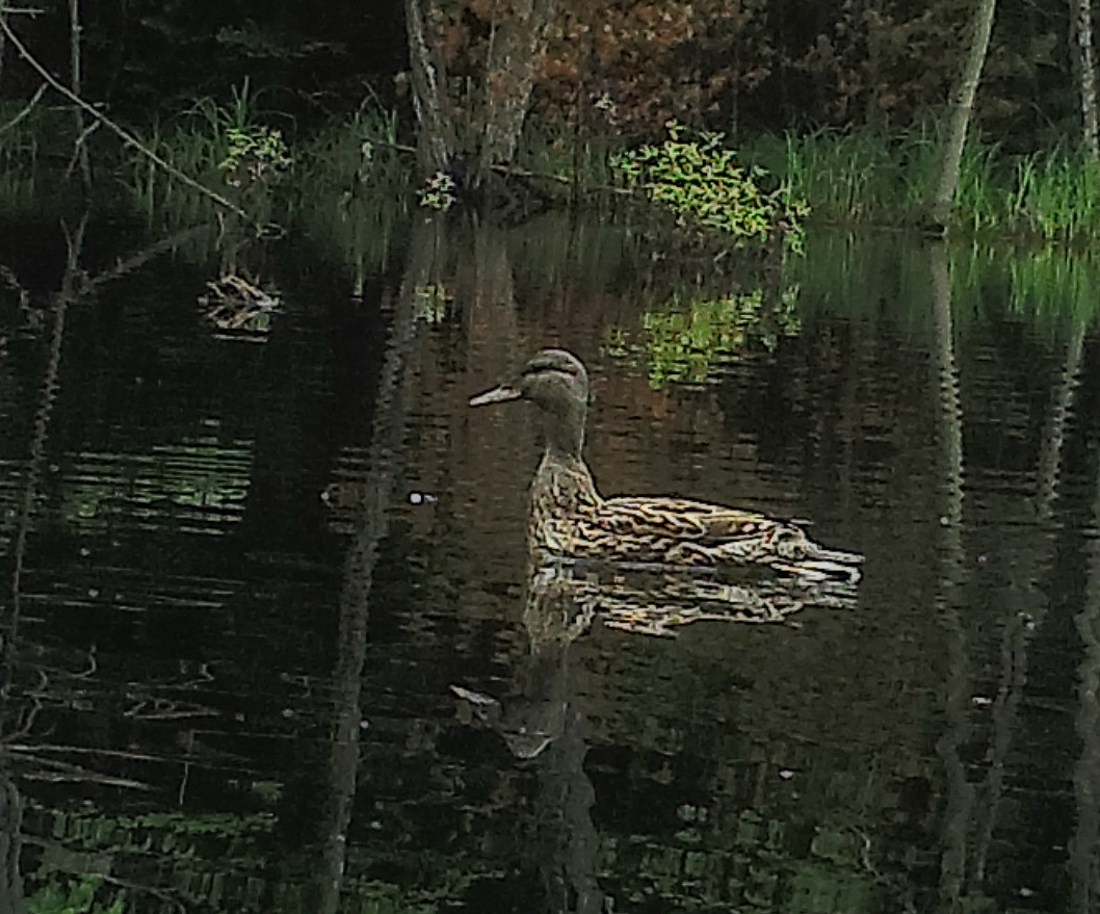
From my game camera located at the edge of the beaver pond last week. This female is probably a common pintail according to my research; the more common species in our area are mallards and black ducks (there is the occasional hooded merganser, as well).
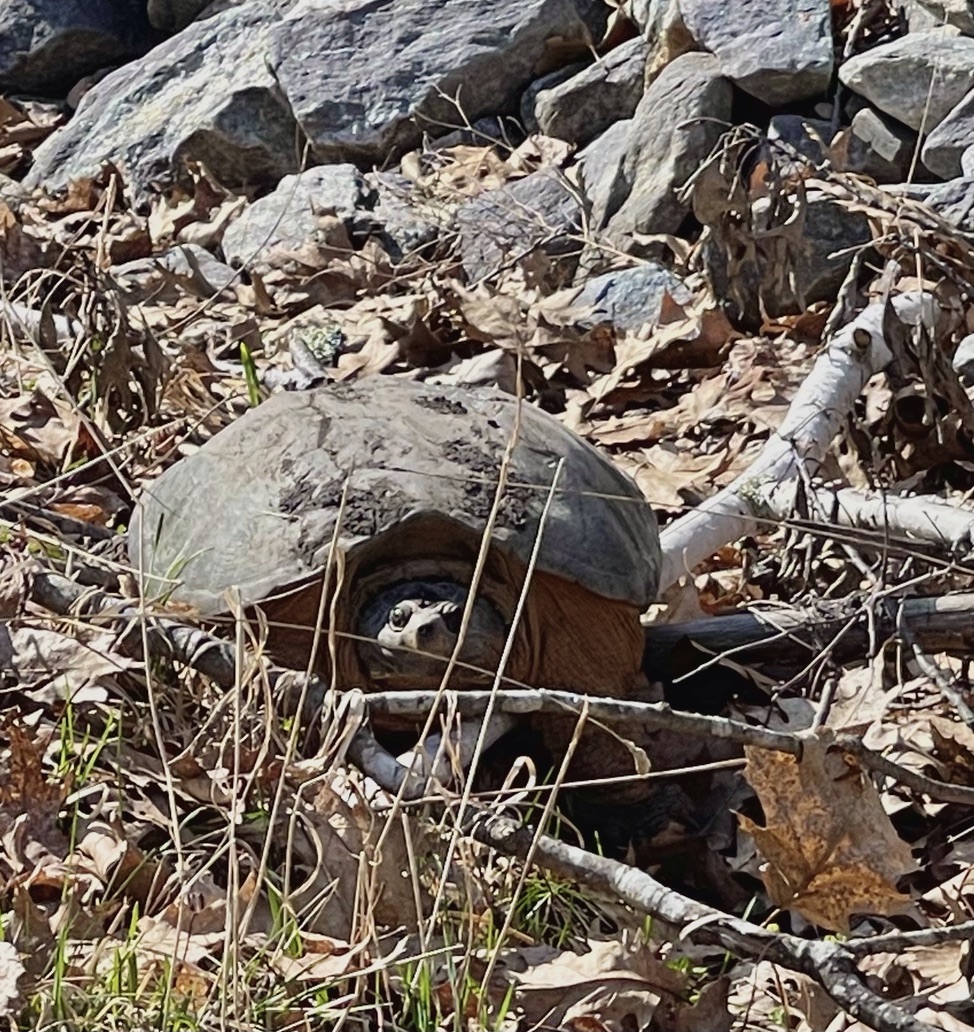
We found this turtle at the forest edge yesterday near a Maine pond. We are assuming it is a she and is on her way to a sandy spot, preferably, to lay some eggs. We have seen evidence in this area of turtle egg laying but have never actually seen the animals doing their thing.
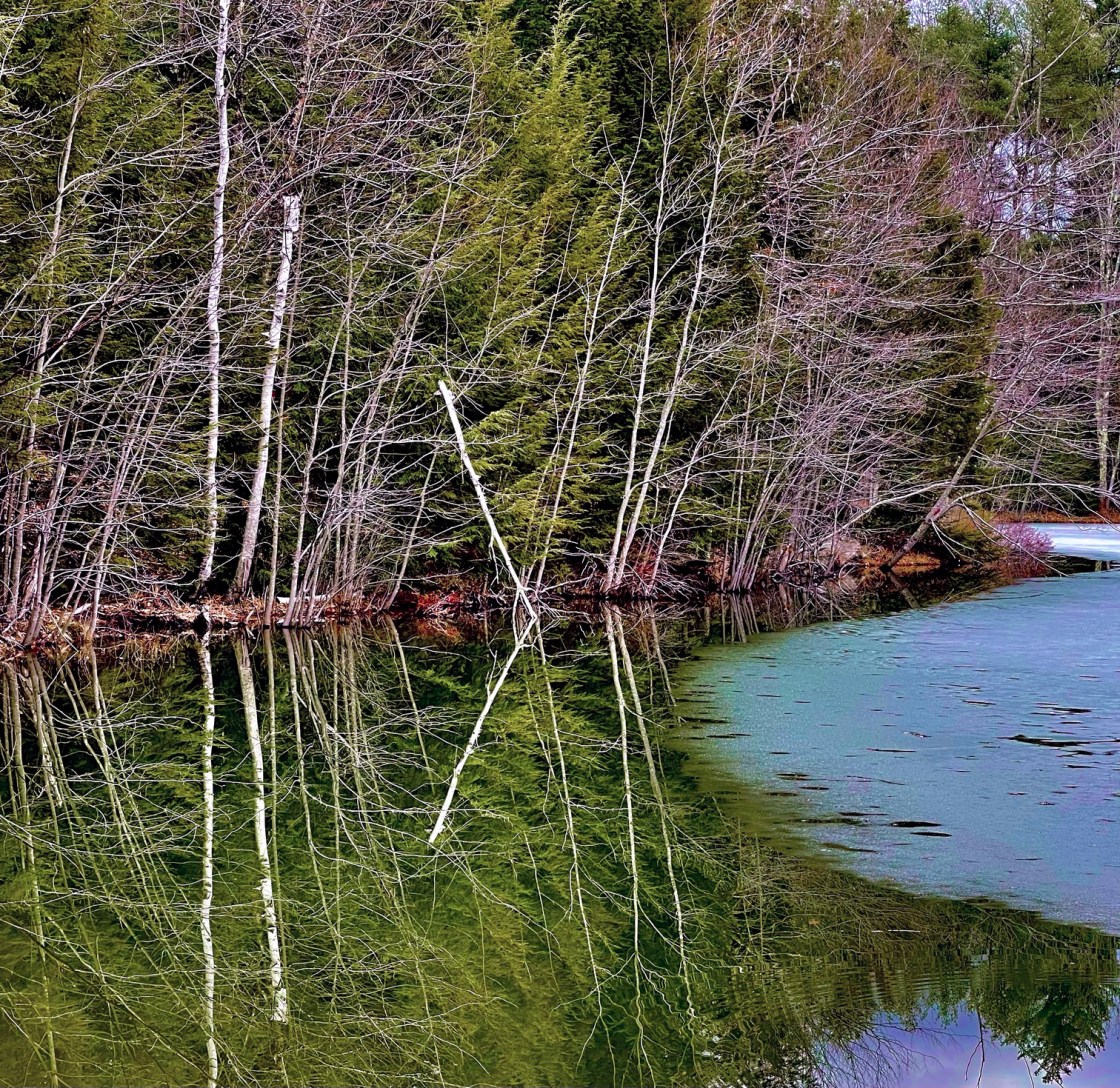
We managed our first hike this year to the No-name pond this past weekend. It was ninety percent ice covered.
In mid-March, the ice on the Kennebec river began to break up. The end of the 2021-2022 winter lingers even after Spring arrives.
During a difficult hiking winter where ice and cold are typical features in the neighborhood, we managed to visit the pond yesterday for the first time in weeks. The snow-machiners have left a semi compacted trail so we managed our hike in cleated boots instead of snowshoes.
Another view of the typical afternoon in late summer along the Kennebec river in Augusta, Maine. The gulls hang around this inland waterway as if they were hanging around the ocean, which is twenty-to-thirty miles away. To make them feel at home, the river actually raises and falls from the tidal affects from the Gulf of Maine (the effect isn’t great and is negligible from this point north).
From a couple months ago during a walk along Mill Park on the Kennebec river in Augusta, Maine.